Shuddering and sideways drift
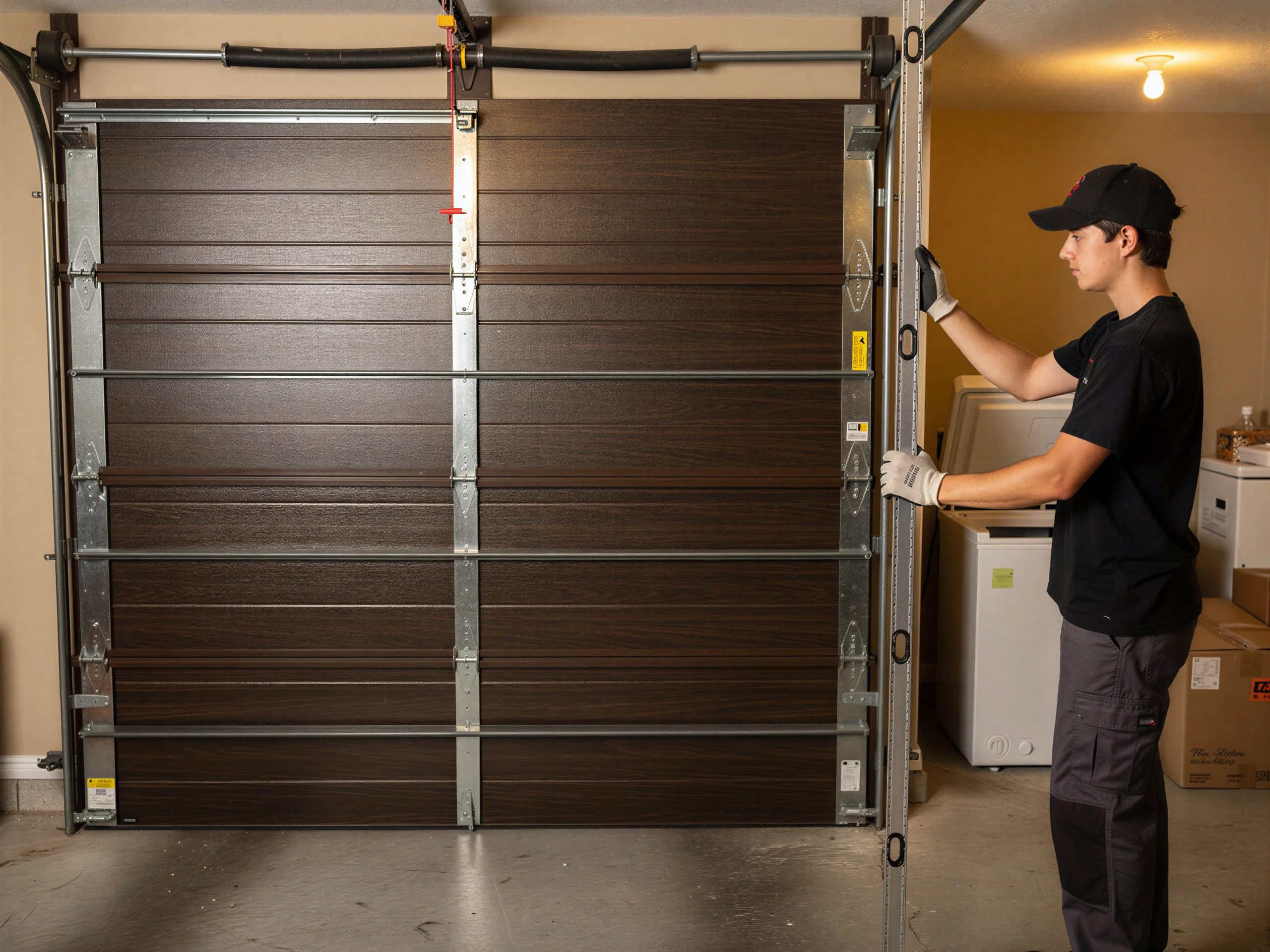
Sometimes it's slower: the door starts to shudder or drift sideways as it travels, which usually means one cable has stretched or slipped off its drum while the other is still holding tension.
Dover, DE
Broken or frayed garage door cables on Dover homes built 1938-2008. We carry replacement cable stock sized for the torsion and extension hardware common across the area.
Local causes
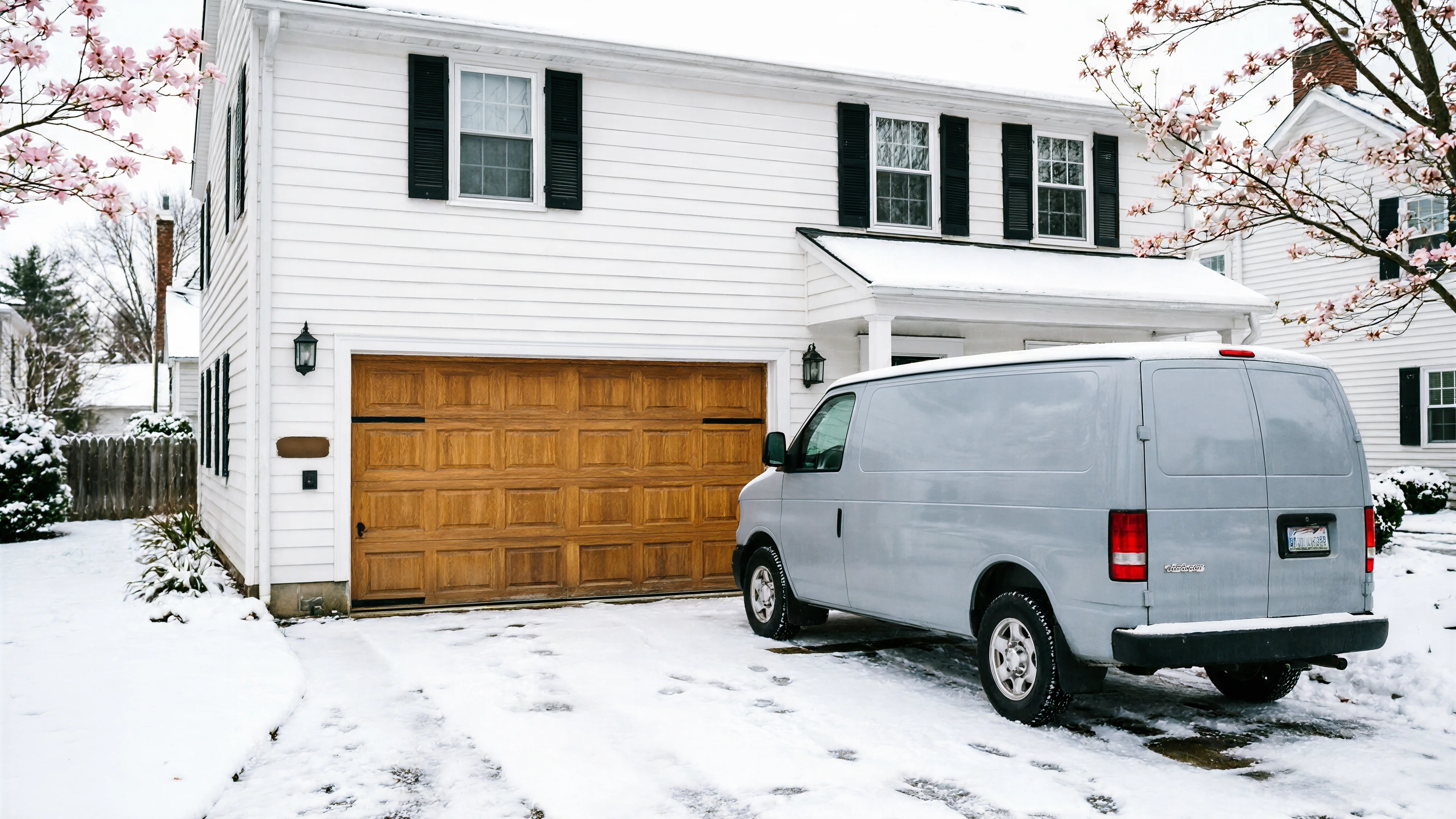
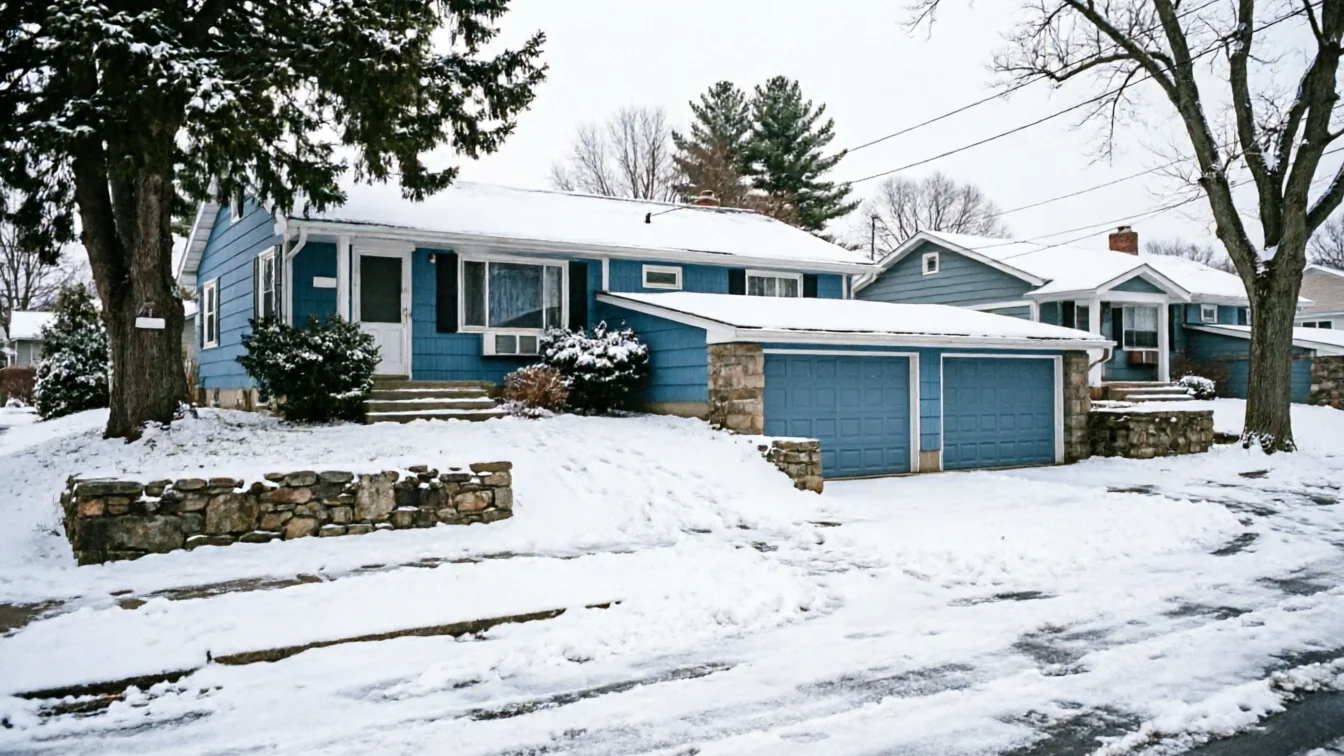
Most of the housing stock across this service area went up between 1938 and 2008, with the median build year landing around 1990, and a lot of it clustered in 1980s and 90s construction across the nineteen named communities we cover. That matters for cables because the lift cable spec, drum size, and cable routing changed more than once over that span. A house built in the 80s or 90s often still has its original galvanized cable, and thirty-plus years of winding and unwinding on the same strand wears the zinc coating thin long before anyone notices a problem.
The other half of it is weather. This area sits in a cold, severe climate band, and that swing matters for cable life more than people expect. Cable doesn't like repeated freeze-thaw cycling - the steel contracts in the cold, the drum and bracket hardware shifts slightly with temperature, and a cable that's already lost some tensile strength from age starts to fray at the drum groove or fatigue right where it clamps to the bottom bracket. Add a few years of road salt tracked into the garage in winter and corrosion speeds the whole process up. None of this is a defect in the house - it's just what cold-climate aging looks like on hardware that's been there since the 90s.
Warning signs
The most common call is a door that won't move at all - one cable has snapped and the door is sitting crooked in the opening, hung up on the track with one side low.
Sometimes it's slower: the door starts to shudder or drift sideways as it travels, which usually means one cable has stretched or slipped off its drum while the other is still holding tension.
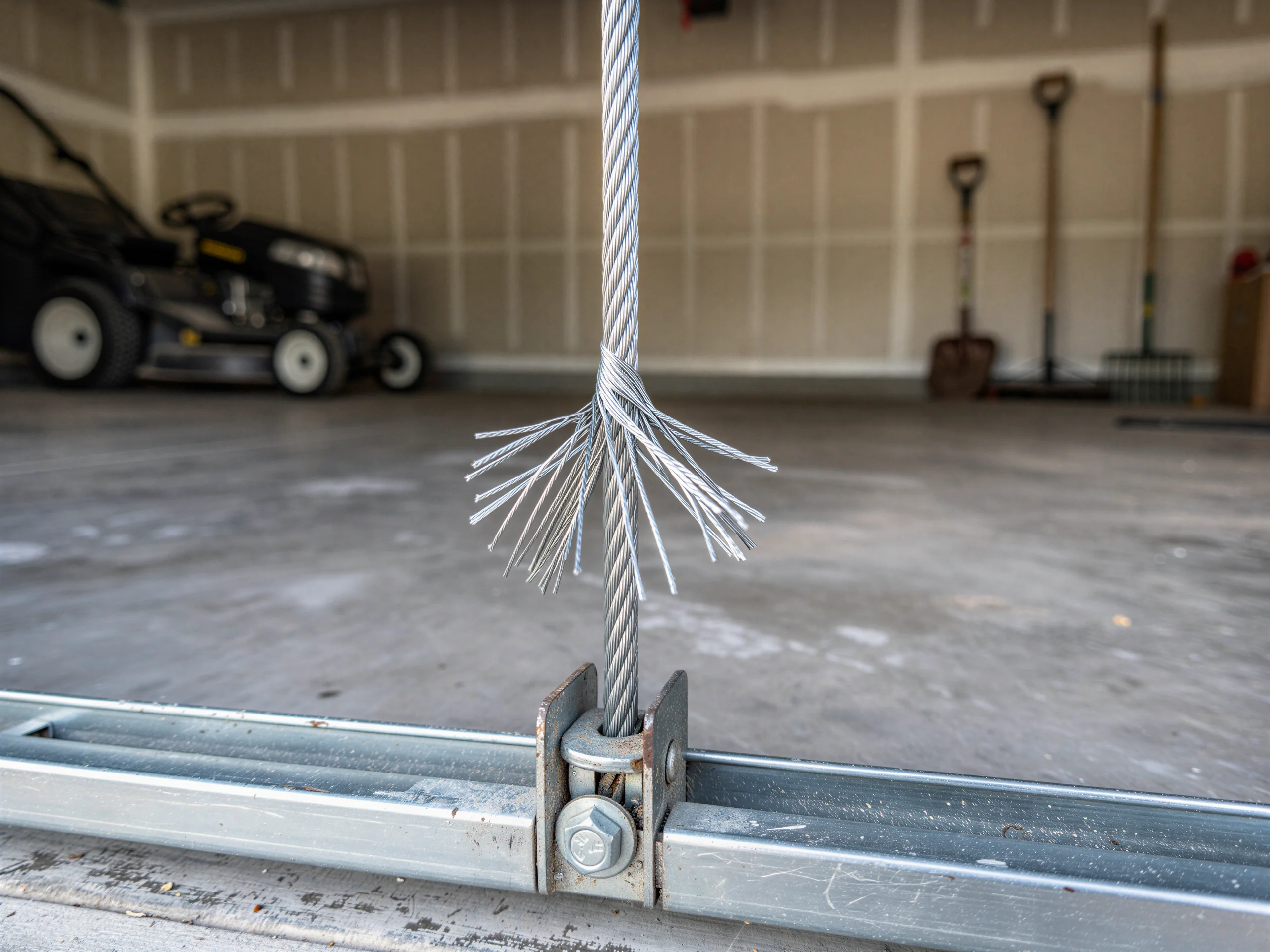
Fraying shows up as visible broken strands near the bottom bracket or at the drum, and it's worth a look before it becomes a snapped cable call, because a cable under load that parts suddenly can let the door drop fast.
On older torsion setups common in the 1980s-90s stock we see a lot of, the cable failure often happens at the same time as spring fatigue, since both parts have been carrying the same load for the same number of years. If your opener is straining, reversing on its own, or the door won't seat flush at the bottom, cable tension loss is one of the first things we check.
On the truck
We stock replacement lift cables sized for the torsion and extension systems most common in homes built across this 1938-2008 window, along with the drums, bottom brackets, and fasteners that typically go with a cable job. Galvanized aircraft cable is the standard swap for residential doors and it's what we carry on the truck for most same-day jobs.
One honest limitation: not every setup is a standard stock part. Older or less common hardware configurations - certain odd-length doors, custom panel setups, or some older extension-spring rigs - sometimes need a part ordered in, and that adds a day or two. We'll tell you straight if your door falls into that category instead of pretending we can finish it on the first visit.
Pricing
Cable repair pricing depends on whether one cable or both need replacing, whether the drums or bottom brackets were damaged when the cable let go, and whether the door needs to come off track to get at the hardware safely.
A single-cable swap on a door that's otherwise sound is a different job than a cable that snapped and chewed up a drum or dented a track on the way down. We give you a number before we start, not after.
If a broken cable has done secondary damage - a bent track, a cracked bottom bracket - we'll point it out and price it separately rather than bundle it in without telling you.
For a lot of the owner-occupied houses we see in this area's older stock, cable repair is a contained job rather than a sign you need a full door replacement, but we'll say so plainly if that's not the case for your door.
Questions
A broken cable usually leaves the door hanging unevenly, crooked in the track, or completely stuck in one spot. A broken spring usually lets the door drop heavily and feel very heavy to lift by hand, but it often still travels straight. If one side looks lower than the other, that's leaning toward cable.
No. A cable that's fraying is close to failing completely, and when it goes, the door can drop fast and unevenly since the opposite side is still under tension. Stop using the opener and call it in rather than risk the door coming down on a car or someone standing underneath it.
On older torsion setups, both cables carry roughly equal load and age at a similar rate, especially with decades of cold-weather cycling. If one has frayed from age, the other is usually not far behind, which is why we check both sides even on a single-cable call.
Explore more
Ready when you are
Dover Garage Door Pros repairs and installs garage doors, springs and openers in Dover, DE and the surrounding area.