Lag-bolted jamb brackets
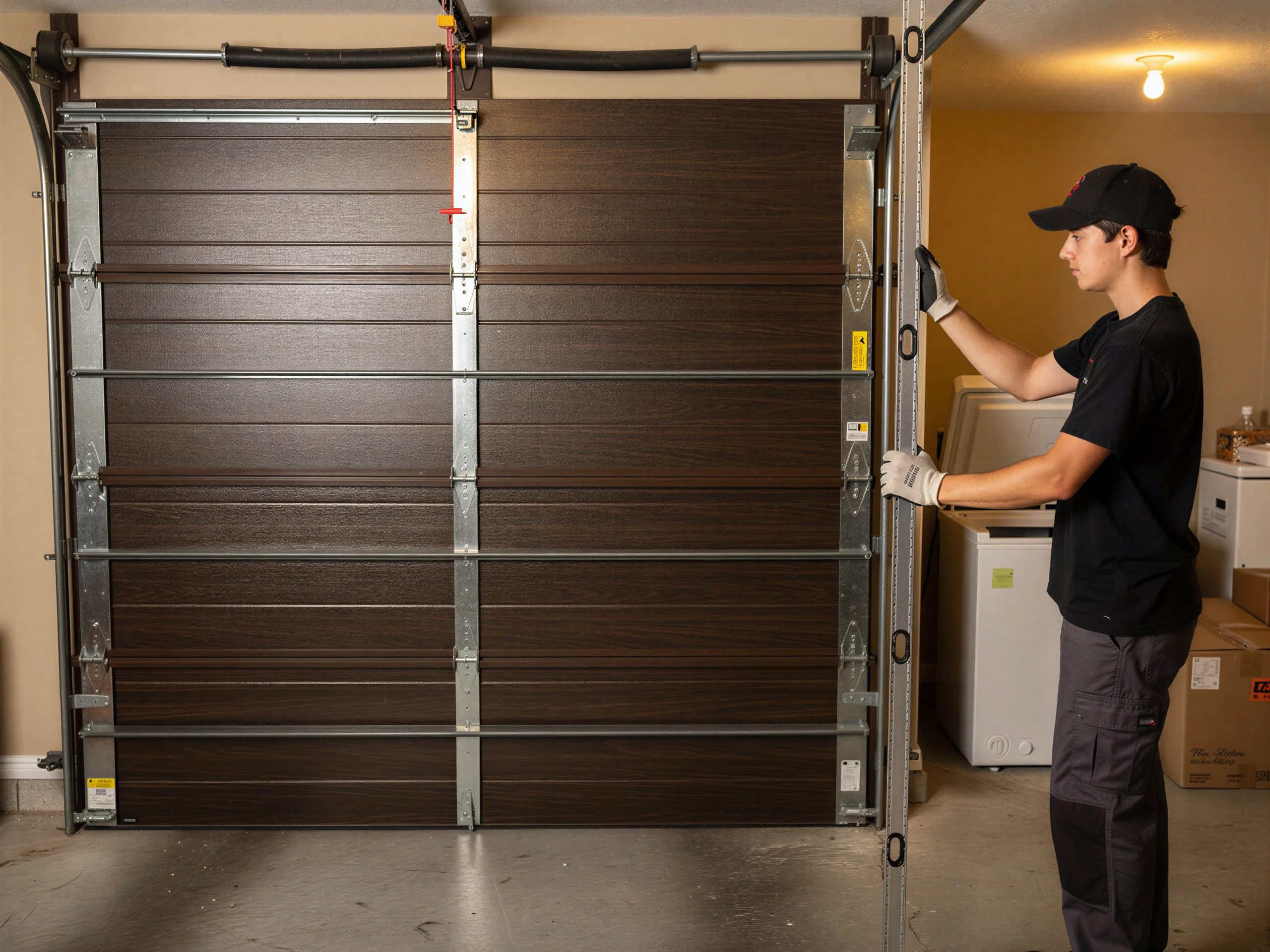
These doors are narrower bodied, often 7-foot tall at most, and the track brackets are lag-bolted straight into jamb wood that's had fifty-plus years to dry out and shrink. The failure pattern follows from that.
Harrington, Dover
Harrington homes mostly went up around 1969, meaning steel doors on older torsion hardware. We travel from Dover to repair and replace them. See what to expect here.
Booking
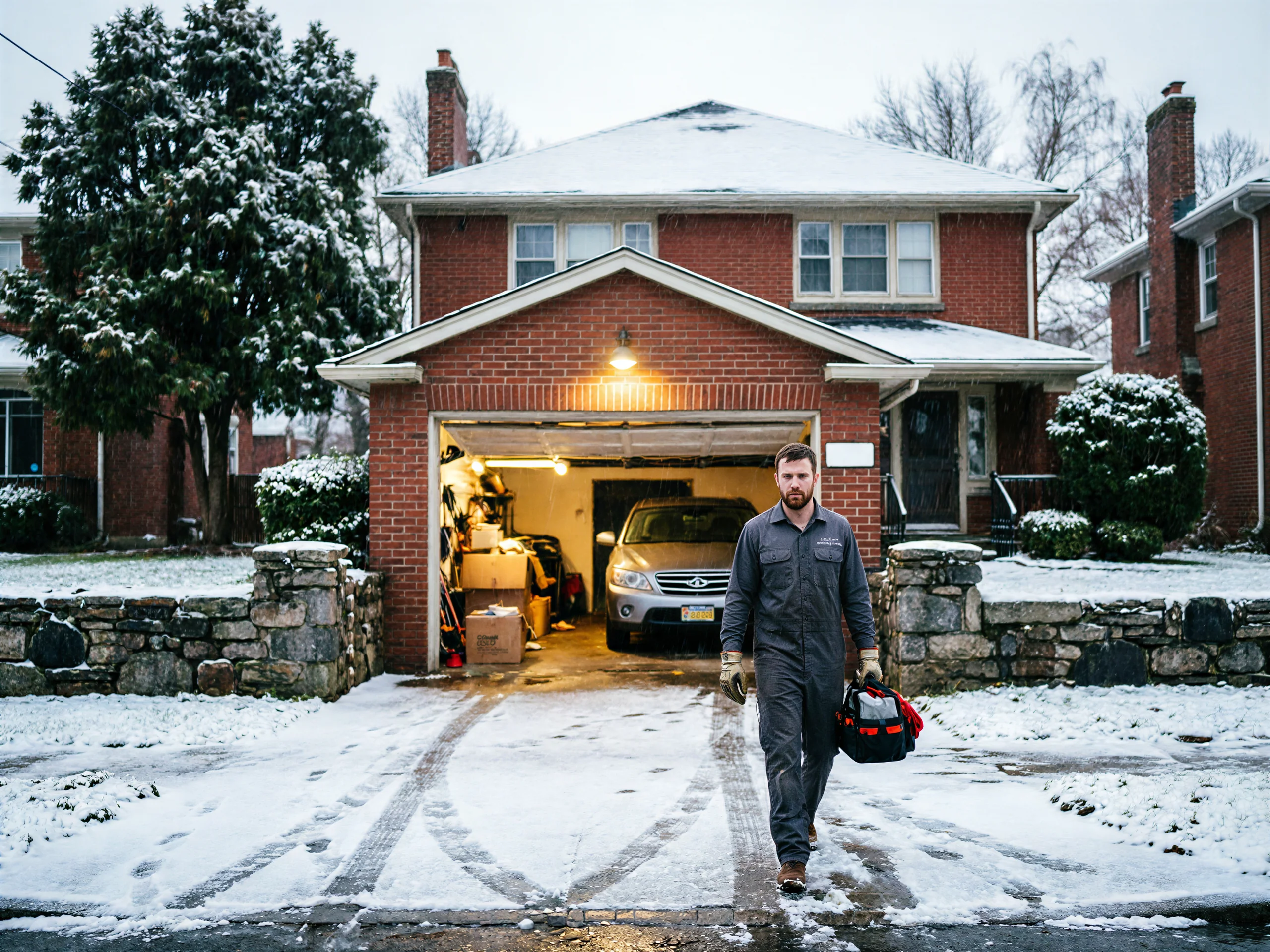
We cover Harrington from our Dover location, about 17 miles northeast, same as the drive out to Houston and Milford. That distance doesn't change what we bring to the job, but it does mean we're not swinging by on a whim between other stops in town the way we might in a neighborhood closer to Dover.
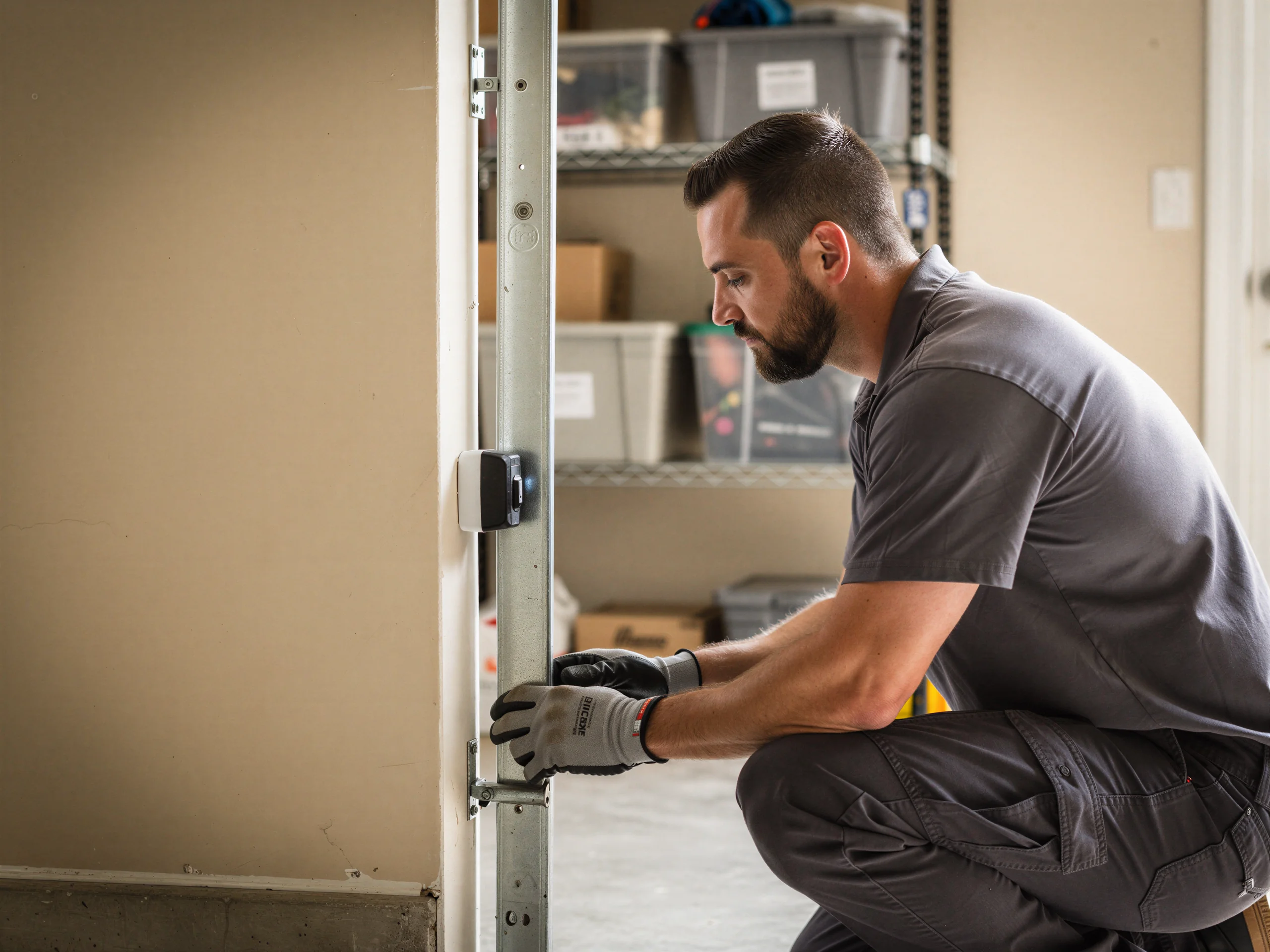
If you call, tell us the door width and whether it's a single or a double bay - with houses here built mostly around 1969, we can usually guess the hardware before we even load the truck, but confirming saves a second trip.
We don't keep a branch or a drop box in Harrington itself; every job starts with a truck coming from Dover. We'd rather you tell us too much than too little.
A broken spring on a 16-foot double from this era behaves differently than one on a 9-foot single, and the torsion bar length, drum size, and cable routing on 1969-vintage track systems aren't always what a newer kit assumes. Give us what you've got - make, approximate age, what it's doing or not doing - and we'll bring the right spring and the right bearings instead of guessing twice.
Warning signs
The typical Harrington garage is a single steel panel door, non-insulated, hung on hardware that's never been swapped since the house went up around 1969 - a year that puts it well ahead of the newer sections and insulated cores you'd find on houses built in the 1990s elsewhere in the county.
These doors are narrower bodied, often 7-foot tall at most, and the track brackets are lag-bolted straight into jamb wood that's had fifty-plus years to dry out and shrink. The failure pattern follows from that.
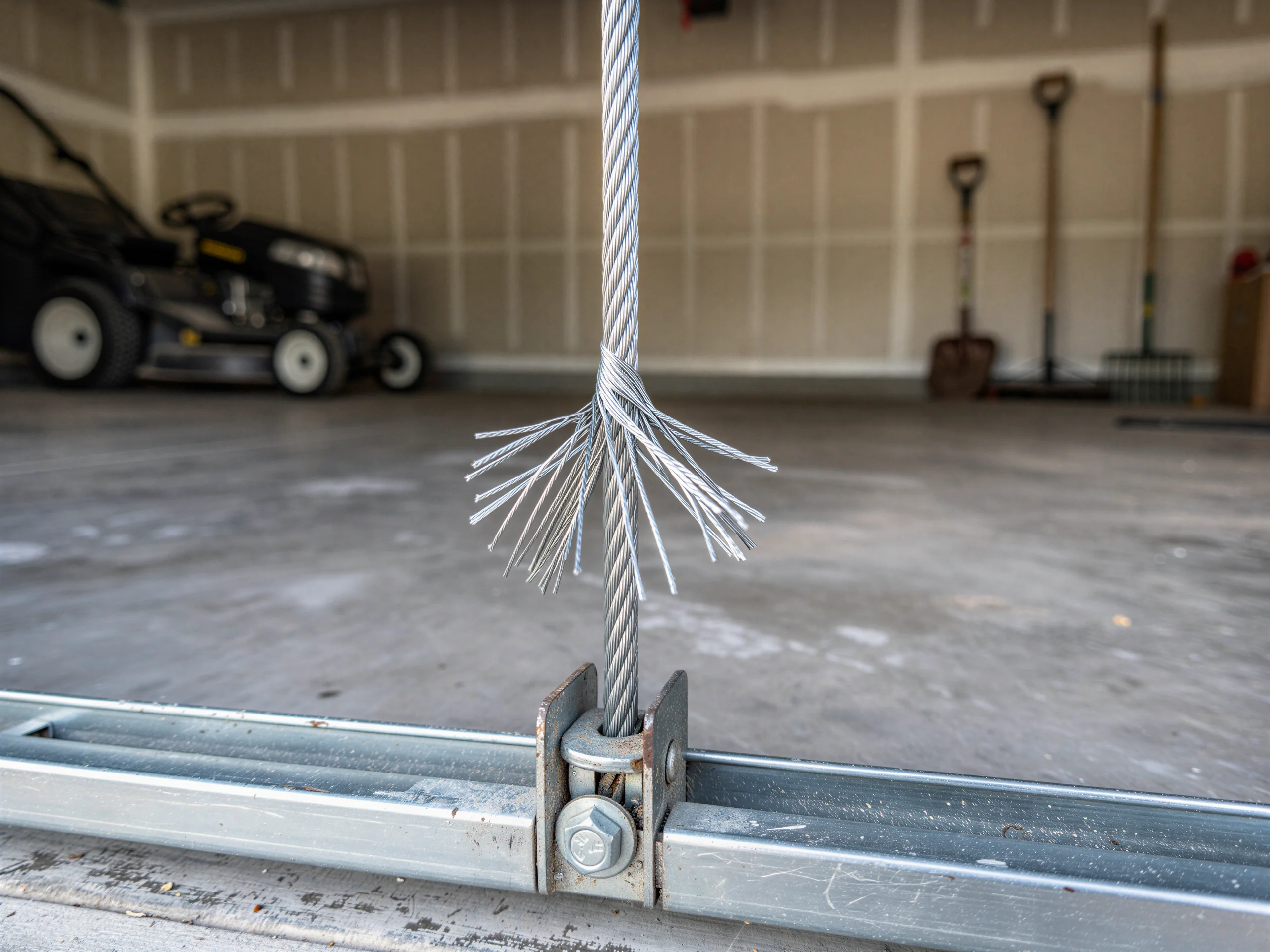
Torsion springs on doors this age are usually the original size, undersized for the door's current weight if a panel's ever been replaced, and the galvanizing on the spring coils has usually gone chalky white by now, which is your sign it's near the end of its wind count.
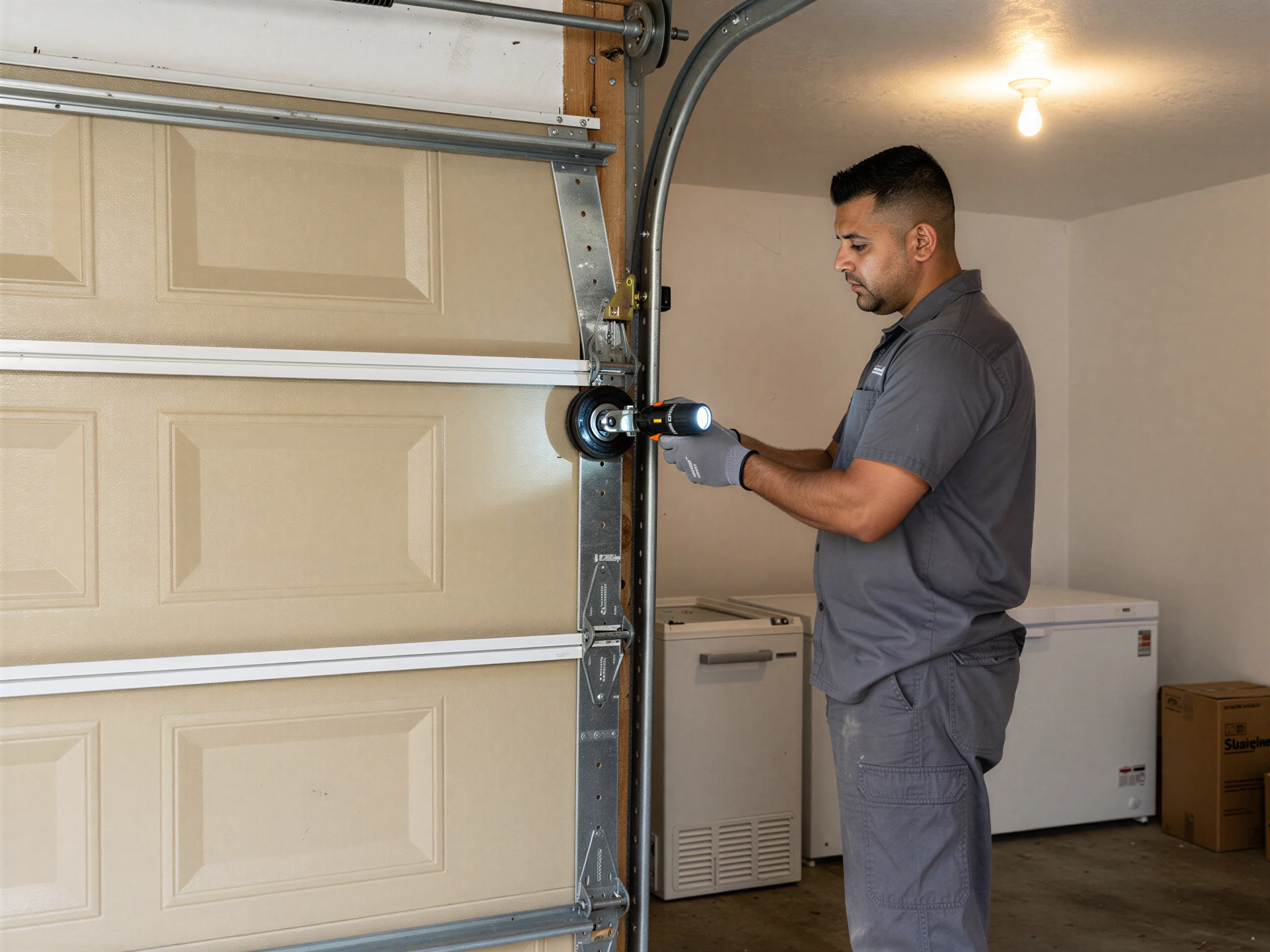
Rollers are often the original steel type, not nylon, so you hear it before you see it - a grinding rattle on the way up that gets worse through winter when the cold tightens every bit of clearance in the track.
Watch-outs
The climate here runs cold and severe enough that metal contracts hard in January, and on a door from this era that means already-tight track alignment gets tighter still.
We've seen openers forcing a door against a binding track and burning out the drive gear - the opener takes the blame, but the track alignment was the actual problem, baked in by decades of minor settling in houses built this many years ago.
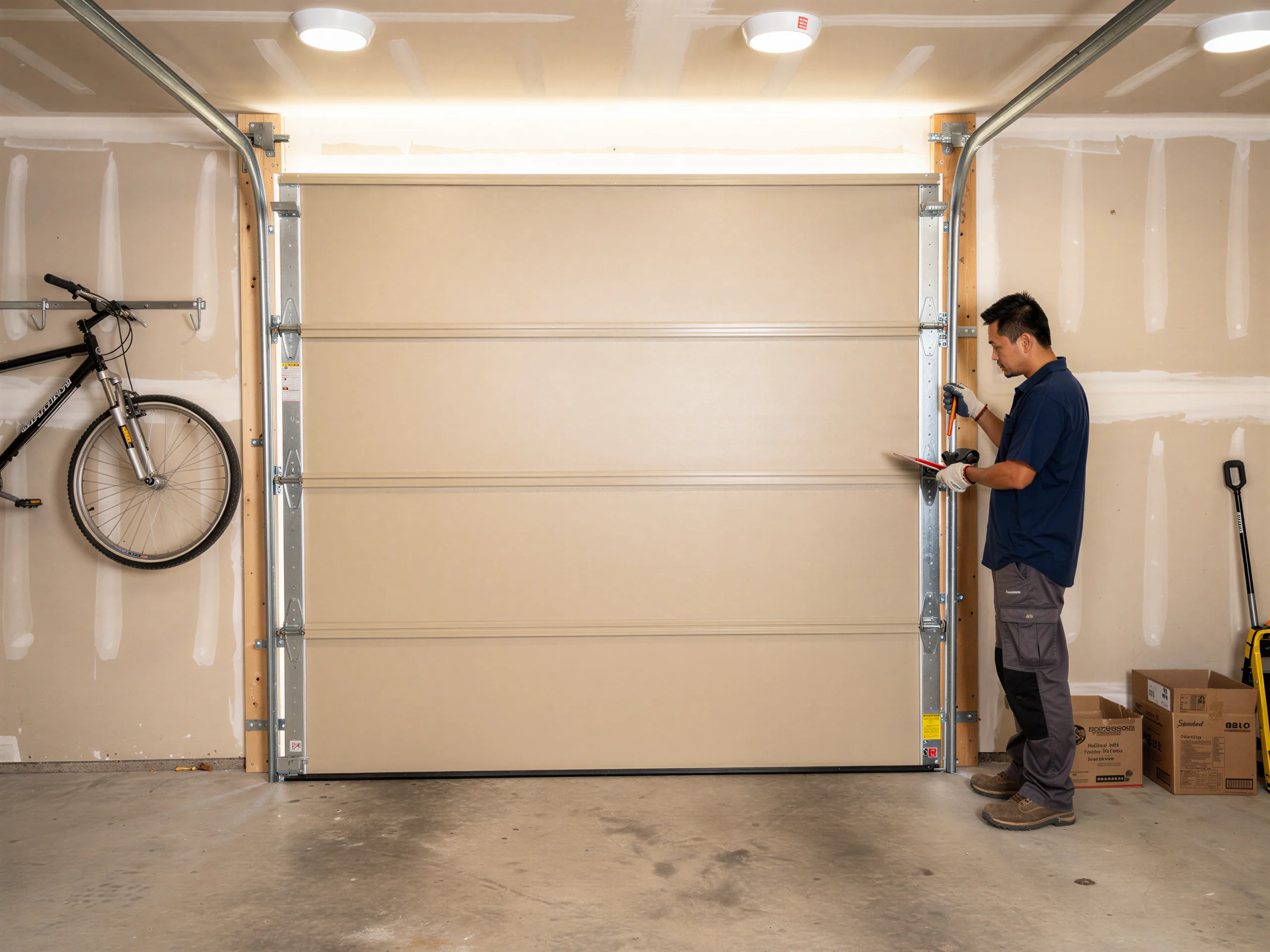
The other place this goes sideways is panel matching. A single replacement panel for a 1969-era door almost never matches the existing ones in gauge or rib pattern anymore, since manufacturers moved on to different stamping profiles decades ago.
We can usually source something close, but 'close' isn't invisible, and we'll tell you that before we order it rather than after you're looking at a door with one panel a shade off.
DIY or pro
Swapping a roller or tightening a loose hinge screw is reasonable weekend work on any door, this era included. What isn't reasonable is touching the torsion spring. On a door this old, the spring is wound to a weight spec you can't read off it anymore, and if it lets go while you're working it can break a wrist or worse - that's not a Harrington-specific risk, that's true everywhere, but it matters more here because so much of the original hardware on these 1969-built houses has never been serviced or replaced, so the spring you're looking at has had five decades to fatigue unevenly.
We also won't talk you into a full replacement if a $72,606 median household income household just needs a spring and a roller set. If the frame's square and the track's not bent, repair is usually the honest call. Replacement makes sense when the door's been patched twice already or the opener's fighting a frame that's shifted enough to bind no matter what hardware you put on it.
Questions
Cold tightens metal clearances, and on original 1969-era track and hardware there wasn't much clearance to begin with. The rattle you hear in January is usually rollers binding slightly in a track that's already close to minimum tolerance, made worse by cold contraction.
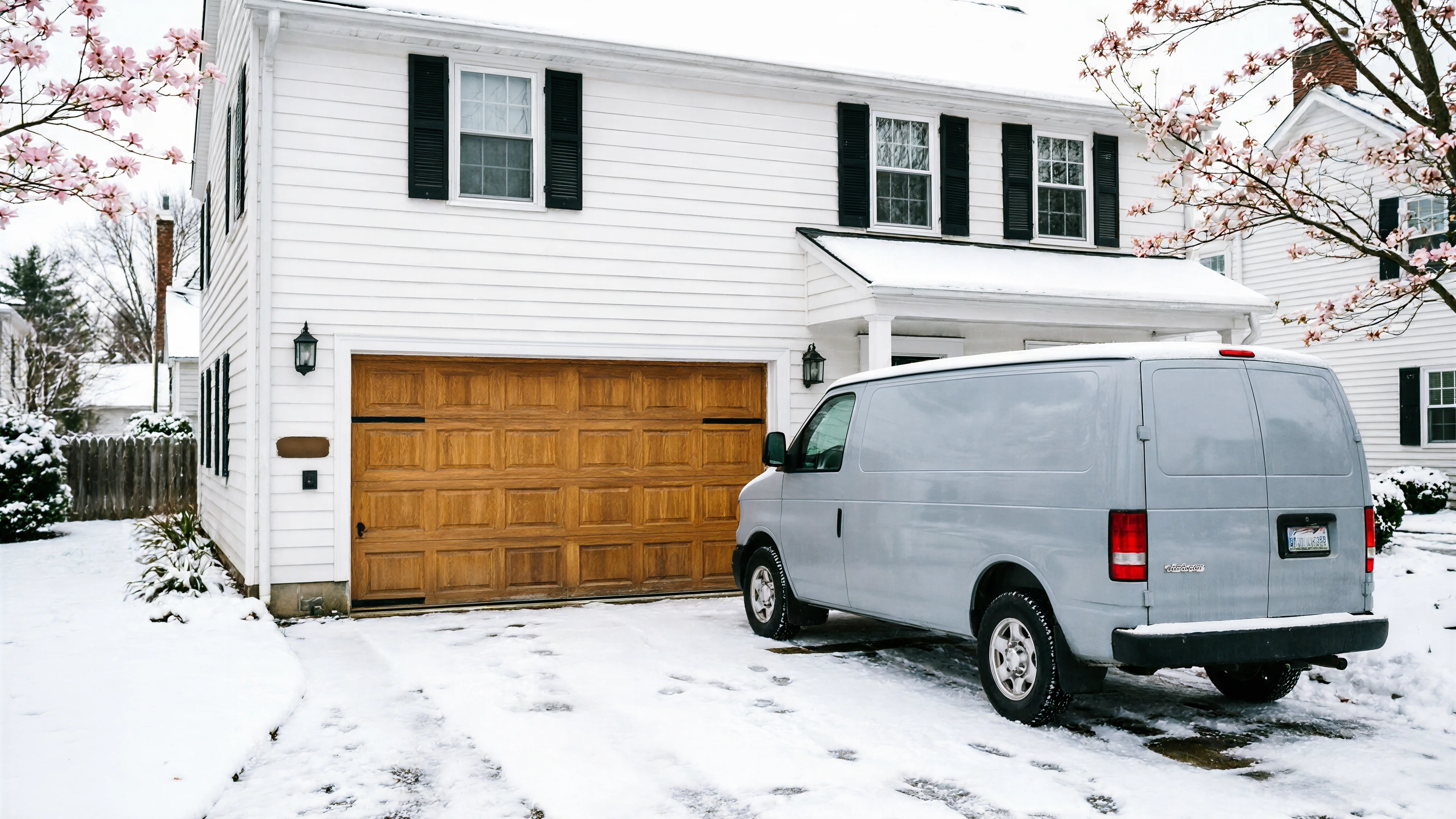
No. We cover Harrington from our Dover location, about 17 miles away. Every job is a truck coming out from Dover rather than a local depot, so we ask for details up front to bring the right parts on the first trip.
Usually we can source something close in size and rib pattern, but on a door built around 1969 an exact match is unlikely since manufacturers have changed their stamping profiles since then. We'll show you the option before ordering so there's no surprise.
If the frame is square and the track isn't bent, a spring and roller repair is usually the right call regardless of the door's age. Replacement makes more sense once the door's been patched more than once or the frame itself has shifted.
Explore more
Ready when you are
Dover Garage Door Pros repairs and installs garage doors, springs and openers in Dover, DE and the surrounding area.